Looking Back – The Silver Screen Cowboys
By J. Bryan Wasson
If there was ever a group of people that influenced my life, it was the silver screen cowboys. I suspect that it was much the same with nearly everyone who is over 50 years of age today.
Every Saturday afternoon was spent at a local movie theater watching B westerns, frequently known as, “horse operas.” On some occasion it was a double feature, but that made it twice as good. I once sat through the same movie five times. I no longer remember the outcome, but I am sure I was very late getting home and I am also sure my parents were not very happy.
A typical Saturday for me went much like this. I would walk or ride a city bus to the downtown central business district of Abilene, Texas. At that point there were five movie theaters in downtown, Abilene. Soon there would be a 6th. Now there is only one, The Paramount. I nearly always went to either the Queen Theater or to the Paramount Theater.
At the Queen Theater, at 12 noon each Saturday there was a live stage show to start the afternoon. There was live entertainment which sometimes included a cowboy movie star or more often, some local talent. Banner Creamery of Abilene, Texas sponsored this program. There were always prizes that could be obtained by means of a specific number of aluminum foil milk bottle tops. The sponsors had worked out a method that did not require the counting of these milk bottle tops. A hole was punched in the center of the tops. Two or three big knots were tied in the end of a piece of string. Then the string was threaded through the holes in the bottle tops. The sponsors had predetermined based upon the length of a string of bottle tops, how many were in each string. Some kids saved the milk bottle tops for weeks or months. A few weeks were the most I could save before I decided to take in my bottle tops.
That is why I never claimed the big prize even though it was what I wanted. The grand prize, always saved for last, was a pair of chrome plated, engraved Hopalong Cassidy cap pistols with a steer head embossed on the genuine, simulated ivory, (plastic) grips. There was a pair of holsters attached to a matching white leather, studded, red reflector mounted belt. Looking back, I suspect the belt and holsters were made of what is known as split leather which is nothing more that an extremely thin layer of leather, bonded to a man made substance which at the time, was most likely cardboard.
The pre movie show at the Paramount was much the same, but it always had a patriotic theme. This was during World War II. In fact it was claimed that this was the meeting of a club known as Defend US All Guards. Each club member was given a military style red, white, and blue overseas cap with the words, “Defend US All Guards” on the side. Somehow we were made to believe that we were contributing to the war effort by attending these so called meetings.
Immediately after the live stage show, there were previews, a cartoon, and a chapter of a serial. These serials often starred some of the same “cowboys” that were in the B Western “horse operas.” They always ended with the hero in such a position that there was no possible way for survival. This always brought folks back the next Saturday to find out what had happened to the hero. The next thing on the agenda was the feature, the B Western starring one of my favorite Cowboy stars.
These movies always had the same plot. A bad man was always up to some illegal scam that would cause harm to the local ranchers. The bad man was always assisted by a group of his equally bad henchmen. Then the hero, the good guy came upon the scene. He always had a side kick. In the case of the singing cowboys, there was often a group such as The Sons of the Pioneers or Bob Wills and his Texas Playboys that assisted the hero.
These movies were clean, wholesome entertainment. Good always prevailed over evil. Right always superceded wrong. The good guys always won. These movies were always bloodless. Frequently, shooting from the hip, a gun was shot out of the hand of the bad guy by the good guy. People got shot, they fell, and sometimes died, but the blood and gore of modern movies was not present. In fact, it was often entertaining to watch all the gyrations a person would go through before falling. I never ceased to enjoy the six shot revolvers that fired 15 or 20 times before it was necessary to reload.
There were always chase scenes. I enjoyed watching to see how many times the same location appeared in a single chase. There were usually some night time scenes. These scenes were actually shot in the day time with the camera light reduced. I was just a child, but I knew horses. Many doubles were used for the horses. I enjoyed watching to see when a different horse was used to portray a specific horse. Most often this was the horse ridden by the hero. Many of the horse “stars” were extremely valuable. Doubles were used in all dangerous scenes. In fact the true equine stars were often only used in close ups.
Silent movies were the only thing available during the 1900s. These first films usually lasted no more than 15 minutes. About 1913, a “Star” system was adopted which publicized named individual actors and actresses. The term, “Movie Star” was thus born. By 1920 silent movies had become extremely popular. Sound was not added to motion pictures until 1927. Color films were available from the 1930s, but were not common until the 1950s.
The first “Silver Screen Cowboy” was William S. Hart. He appeared in silent movies. This was slightly before my time. One of the most important of the early cowboy stars was Tom Mix and his horse Tony. Tony was billed as, “The Wonder Horse.” Tom Mix appeared in both silent movies as well as the early “talkies.” Tom Mix and Tony also appeared in Circuses and Wild West Shows. It has been said that Tom Mix created his own pre movie Star background. I have read and heard the claim that Tom Mix was once a Texas Ranger. I have never found any evidence that this was true.
Henry W. Gaffney of Lititz, Pennsylvania, an ADMS member, recently sent me a photo of Tom Mix and Tony, the original of which was given to him by Tom Mix back in Mister Gaffney’s childhood. It is with great appreciation that I have added this photo to my cowboy collection.
By the time I was in High School, Tom Mix was a long time deceased. The Ralston Purina Company, however, sponsored the Tom Mix Show on radio every afternoon at about 5:00PM. A radio actor played Tom Mix. Sound effects created Tony as well as all the action. Tom Mix and Tony got into and out of all kinds of complicated situations. At the time, we were living on the family farm at Potosi, south of Abilene. My Father and my Mother both worked in town. I had an aunt and uncle who lived a few blocks from Abilene High School. I would walk to the home of my aunt and uncle and listen to the Tom Mix Show each day after school. There was even a theme song that started, “Shredded Ralston for your breakfast starts the day off shining bright, it’s a warm up build up breakfast, and it makes you feel just right.” It made the listeners believe that Tom Mix, even though deceased, started each day with this same breakfast. It most likely sold a lot of breakfast cereal.
I can no longer name all of my cowboy heroes. One that stands out in my mind is Charles Starrett. I got to see him and his Palomino horse in person at the Linda Theater on Pine Street in Abilene. Many years later as an Abilene Police Officer, I had the occasion to be back stage in the Linda Theater. There were doors that opened into the alley and a very small room behind the stage with about three steps going up to the stage. I have no earthly idea how they got that horse up on the stage, but they did.
Some of my other movie cowboy heroes were Ken Maynard, Tim Holt, Tim McCoy, Johnny Mack Brown, Don Red Berry, Buck Jones, Robert Ryan, and many more that I can no longer name.
William “Bill” Boyd using the name Hopalong Cassidy or Hoppy was another extremely popular silver screen cowboy. The Hopalong name came about by a limp that was used in his first couple of movies. The story indicated the limp was due to a gunshot wound to the leg. Soon the limp faded away, but the name stayed.
It has often said concerning Western movies that, “good guys always wear white hats.” Hopalong Cassidy was an exception to this rule. He most often wore a black hat and black clothing. William Boyd had white hair and he rode a white horse. His white hair and his white horse really stood out, contrasting that black hat and black clothing.
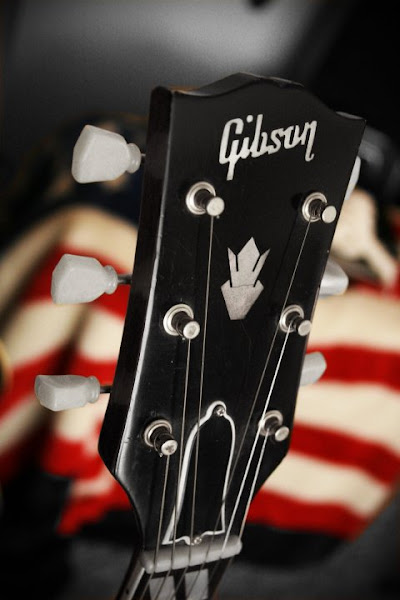
There was probably as much merchandising of Hopalong Cassidy products as there was for Gene Autry and Roy Rogers merchandise. There were mugs and lunch boxes and many other items. I have a Hopalong Cassidy mug in my collection. For years I have searched for a Gene Autry or Roy Rogers guitar. Those I have found have been in extremely poor condition with an extremely high price.
Some movie cowboys rode unusual horses. One such actor was Bob Steel. He rode a horse of a color that was sometimes called, a “black Palomino.” These horses are Palominos with so much dark dappling that it makes the coat color appear to be black or near black dependant upon the extent of dappling. In those early black and white movies, the black appearance was enhanced. This dark color enhanced the white mane and tail. There was another thing unusual about Bob Steel in that he appeared in movies as both the hero and as the villain. I guess that is one of the marks of a great actor. They can play any part.
Randolph Scott was a cowboy star, but he also played in other type roles. He like Bob Steel rode an unusual horse. The horse was sorrel with a white rather than flaxen mane and tail. I often suspected the mane and tail might have achieved this lack of color by means of bleach or possibly mane and tail whitener often used on Palominos in preparation for the show ring. Randolph Scott played in both B westerns and A westerns.
There was another category of movie cowboys. These were the “Singing Cowboys.” The first of these was known as Singing Sandy. He was none other than Marion Morrison who later adopted the name, John Wayne. Singing Sandy, the first singing cowboy could not sing. All the singing was dubbed in. As John Wayne he made many movies classed as A Westerns as well as a wide variety of other types of films.
The second cowboy star and the first singing cowboy that I saw in person was Tex Ritter. When I was in High School I was active in vocational agriculture and the Future Farmers of America (FFA) as well as the 4H Club. The big event for FFA and 4H Club each year in Taylor County was the Spring Livestock Show at the Fair Grounds in Abilene. There is a big round building that still stands. It was used as the judging ring for livestock shows. Most of the exhibitors, including myself spent the nights at the stock show sleeping on cots near their animals.
The stock show management arranged for Tex Ritter to be in the show ring building one night to entertain the exhibitors. It was just Tex and his guitar, no band. Because I am a music lover and guitar player, it was a great treat for me. An event I will never forget.
About a year later, I appeared on stage in that same building with Bob Wills and the Texas Playboys as part of a talent contest. Needless to say I was not the winner of this contest, but I will always remember being on the stage with the Texas Playboys. The fact that it was in the same building where I met Tex Ritter made me enjoy it more.
Another singing cowboy I saw in person was Gene Autry. I was an adult by the time I saw him in concert at Rose Field House, located on the campus of Hardin Simmons University in Abilene. Gene Autry was one of the two most popular of the singing cowboys. He joined the U.S. Army during World War II. If my memory is correct, he served in the Army Air Corps.
Gene Autry was a telegraph operator in Oklahoma when he was discovered by Will Rogers while playing his guitar and singing. Will Rogers was also a cowboy, a trick roper, a vaudeville entertainer, and news paper writer. Will Rogers also made a number of movies. I don’t remember how many, or if any of them were westerns
Gene Autry was one of the two best known and most popular of the singing cowboys. He later joined into a partnership with Everett Coburn as a Rodeo Producer. He also became the owner of a professional baseball team and established the Gene Autry Western Heritage Museum.
One of my childhood treasures that survived into my adulthood is a photo of Gene Autry on his horse, Champion.
Other singing cowboys included Johnny Bond and Jimmy Wakely. Johnny Bond sometimes played the singing sidekick. Another singing sidekick was Smiley Burnett, known as Frog due to his deep voice. Smiley “Frog” Burnett was often the sidekick of Gene Autry.
The second of the two best known and most popular singing cowboys was Roy Rogers. Roy Rogers was born Leonard Sly. Roy Rogers was actually his second screen name. He was a member of the great western music band, The Sons of the Pioneers led by Bob Nolan. The Sons of the Pioneers often played supporting roles in early Gene Autry movies and later in Roy Rogers movies. Young Leonard Sly as a member of the Sons of the Pioneers was known as Dick Weston in these movies. It has often been reported that Roy Rogers founded the Sons of the Pioneers. I do not know if that is correct, but he was an extremely important member of this group.
In the late 1960s, my wife and I had the pleasure of seeing Roy Rogers and Dale Evans in the Taylor County Coliseum at the West Texas Fair in Abilene, Texas. Roy Rogers became an honorary Texas Law Enforcement officer. A group of my peers elected me President of The Law Enforcement Officers Association of Texas for 1970 – 71. During that time period, I made Roy Rogers an honorary member of The Law Enforcement Officers Association of Texas.
When Gene Autry entered military service during WWII, Roy Rogers and his Palomino horse, Trigger, moved up to fill in the gap. After the death of Roy Rogers’ wife, he married the leading lady in his movies, Dale Evans. Together they continued to make movies, television shows, personal appearances and recordings. Both Roy and Dale were prolific song writers. Gene Autry also had a regular TV show called, The Melody Ranch Show.
With the advent of television, the B Westerns started to fade out of existence on the silver screen, however, some of the old B Westerns gained new life on the TV screen. Many new western shows along the line of the old B westerns were created specifically for TV. I guess my favorite was The Lone Ranger with Clayton Moore as the lone Ranger and J. Silverheels as Tonto.
Another former member of The Sons of the Pioneers, Ken Curtis became the second sidekick for Marshal Matt Dillon (James Arness) in the long running TV series, Gunsmoke. Ken Curtis played the part of Deputy U.S. Marshal, Festus Hagan. Ken Curtis was in at least one Gunsmoke show before he assumed the role of Festus. Ken Curtis assumed the role of Festus in a few episodes before Festus became Mat Dillon’s Deputy. As Festus, his mount was a bay mule he called Ruth. I can not remember any movie or TV cowboy sidekick other than Festus, who rode a mule.
The last of the singing movie cowboys to come on the scene was Rex Allen. Rex Allen was a true Arizona cowboy and in my opinion one of the best singers that ever lived. It was reported that his voice had the greatest voice range of all singers of any style of music including classical opera. His voice made him the narrator of numerous Walt Disney films long after his silver screen singing cowboy days.
Rex Allen was one of the movie cowboys that rode an unusual horse. The producers of his movies told him to find an unusual looking horse and that is just what he did. He found a chocolate brown stallion with a white mane and tail. He named the stallion Cocoa. The stallion was reported to be extremely gentle and to be no problem around other horses.
In my lifetime, I have seen only one other horse of this color. A family friend in the Potosi community had such a horse in the late 50s and early 60s. I am sure there are other such horses, but they must be few.
Cocoa was such an unusual horse that neither Rex Allen nor the movie producers were willing to risk possible injury to the horse. The unusual color made it seem impossible to find a double for scenes with the remote possibility of injury to the horse. They found a rather easy way to do this, however. They used a white or a gray horse. They died the entire coat of the horse leaving face and feet markings white. The mane and tail were also left white.
There was one other cowboy who made a big impact on my life. He was never a movie star, but he worked in the movie industry and one of his books became a movie. He was Will James, a true life cowboy, writer and artist. I think I learned more about the equine anatomy from the drawings of Will James than from any other source.
Will James was often the double riding a bucking bronc. He was also often a back ground extra as well as working behind the scenes as a horse wrangler.
His work in Hollywood however was not his most important work. During the late 30s through the 50s it was hard to find a kid that had not read Will James’ most famous book, Smokey the Cow Horse while in school. Many schools used this book as a reading textbook known as, a reader. This book was made into a movie although the movie was not very true to the book and the story as Will James wrote it. For one thing they did not even get the color of the horse correct. The movie folks used a brown horse to play the part of Smokey. Will James described the horse as what he called mouse color.
During my time in the 7th, 8th, and 9th grades I read every book that Will James wrote and some of them more than one time. I read Smokey the Cow Horse again about two years ago. Any lover of equines who has never read the books of Will James or seen his art is missing much. I think the most important thing that Will James taught me is to take care of your animals first, before your own needs.
I sincerely believe that for all of us still living today who were born in the 1930s or before, our lives were a little bit richer because of the silver screen cowboys. As Roy Rogers would say, “Happy Trails.”
November 17, JBW
Note: This article was previously published in The Brayer magazine. I had more fun writing this article than any other that I have written for The Brayer which is published by the American and Donkey Society (ADMS).